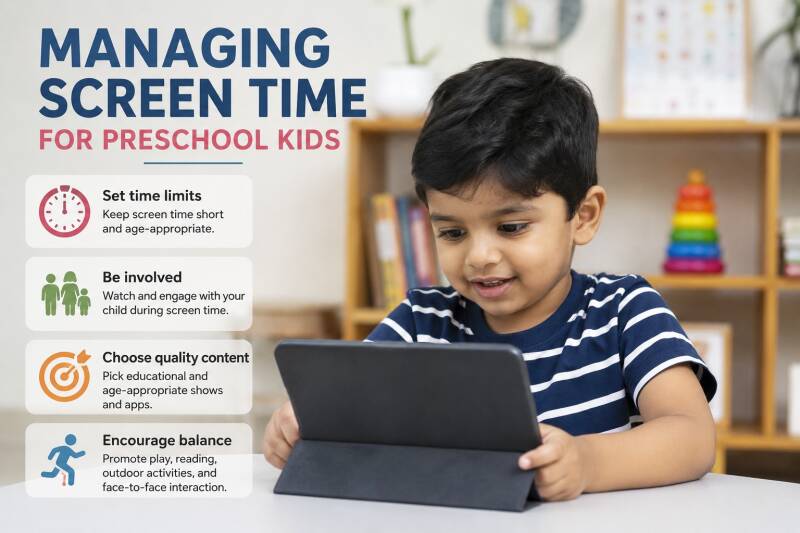
In today's digital world, screens are a part of everyday life. From smartphones and tablets to televisions and computers, children are exposed to technology at an early age. While educational programs and interactive learning apps can offer benefits, excessive screen time may affect a preschool child's physical health, sleep, social skills, and overall development. Managing screen time effectively helps children develop healthy habits while ensuring they have enough opportunities for active play, learning, and family interaction.
Why Screen Time Management Matters
Preschool years are a crucial period for brain development. During this stage, children learn best through hands-on experiences, social interactions, creative play, and exploration of their surroundings. Too much screen exposure can reduce the time spent on these important activities.
Excessive screen time may lead to:
- Reduced physical activity
- Difficulty focusing and paying attention
- Sleep disturbances
- Delayed language and social development
- Increased dependence on digital entertainment
Recommended Screen Time for Preschoolers
Experts generally recommend limiting recreational screen time for children aged 2–5 years to about one hour per day of high-quality content, preferably with parental involvement. The focus should be on quality rather than quantity.
Tips for Managing Screen Time Effectively
- Create Clear Screen Time Rules
Establish consistent rules about when and where screens can be used. Having predictable routines helps children understand expectations and reduces conflicts.
- Choose Educational and Age-Appropriate Content
Select programs, apps, and games that encourage learning, creativity, and problem-solving. Review content beforehand to ensure it is suitable for your child's age and developmental stage.
- Watch and Learn Together
Whenever possible, participate in screen activities with your child. Discuss what they are watching, ask questions, and connect the content to real-life experiences. This makes screen time more interactive and educational.
- Encourage Active Play
Balance screen use with physical activities such as running, jumping, dancing, outdoor play, and sports. Active play supports healthy growth and motor skill development.
- Establish Screen-Free Zones
Designate certain areas, such as bedrooms and dining tables, as screen-free spaces. This encourages family interaction, better sleep habits, and mindful eating.
- Avoid Screens Before Bedtime
The light emitted from screens can interfere with sleep. Turn off devices at least one hour before bedtime and replace screen activities with calming routines like reading stories.
- Offer Engaging Alternatives
Provide children with activities that stimulate creativity and imagination, such as:
- Reading books
- Drawing and coloring
- Building blocks
- Arts and crafts
- Puzzles
- Pretend play
- Music and dance
- Be a Positive Role Model
Children learn by observing adults. Demonstrating healthy screen habits yourself can encourage your child to do the same.
Signs That Screen Time May Need Adjustment
Parents may consider reducing screen use if their child:
- Becomes upset when devices are removed
- Loses interest in other activities
- Experiences sleep difficulties
- Has trouble focusing
- Prefers screens over social interaction
Finding the Right Balance
Technology can be a useful learning tool when used thoughtfully and in moderation. The goal is not to eliminate screens completely but to create a healthy balance between digital experiences and real-world learning opportunities. By setting clear boundaries, choosing quality content, and encouraging active play and family interaction, parents can help preschool children develop positive habits that support their growth and well-being.
Conclusion
Managing screen time effectively is an important part of raising healthy and happy preschoolers. With consistent routines, parental guidance, and a focus on balanced activities, children can enjoy the benefits of technology while continuing to explore, learn, and thrive through meaningful real-world experiences.
Add comment
Comments