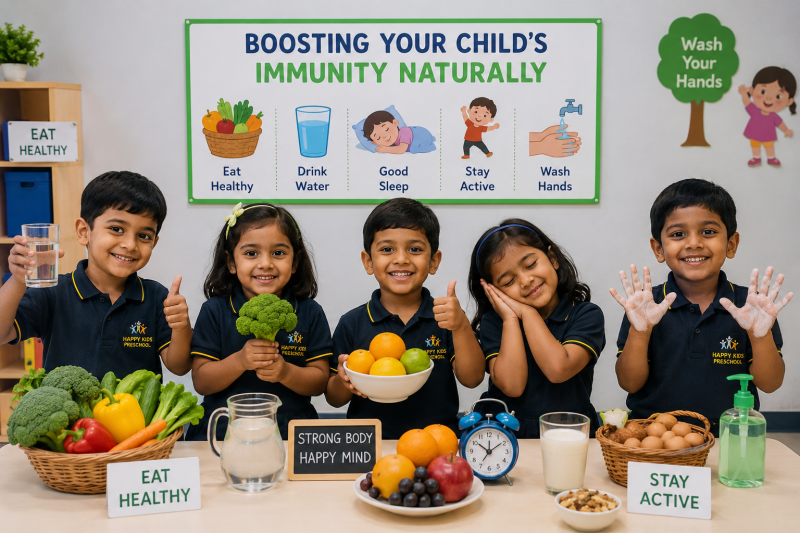
As parents, one of the greatest priorities is keeping children healthy and happy. Preschoolers are naturally curious and love exploring the world around them, which also means they are exposed to germs more often. While it's normal for young children to catch occasional colds as their immune systems develop, there are many natural ways to strengthen their immunity and support overall health.
What Is the Immune System?
The immune system is the body's natural defense against harmful bacteria, viruses, and other germs. A strong immune system helps children fight infections more effectively and recover more quickly when they do become ill.
Healthy daily habits play a vital role in building a resilient immune system.
- Provide a Balanced and Nutritious Diet
Good nutrition is the foundation of a strong immune system. Offer your child a variety of colorful fruits and vegetables every day, as they are rich in vitamins, minerals, and antioxidants that help protect the body.
Include foods such as:
- Citrus fruits like oranges and sweet limes for Vitamin C
- Carrots and sweet potatoes for Vitamin A
- Spinach and broccoli for essential nutrients
- Yogurt with live cultures to support gut health
- Eggs, fish, beans, and lean meats for protein
- Whole grains for lasting energy
Limiting sugary snacks and processed foods can also help support better overall health.
- Encourage Plenty of Water
Proper hydration helps the body function efficiently. Encourage children to drink water regularly throughout the day, especially during outdoor play and warm weather. Fresh water is always the best choice over sugary drinks.
- Ensure Adequate Sleep
Sleep is one of the body's most important healing and growth periods. During sleep, the immune system works to repair and strengthen itself.
Most preschool children need around 10–13 hours of sleep each day, including naps if needed. A consistent bedtime routine helps children enjoy restful, quality sleep.
- Promote Active Play Every Day
Physical activity keeps children healthy and supports immune function. Encourage activities such as:
- Running and jumping
- Dancing
- Riding a scooter or bicycle
- Outdoor playground games
- Simple obstacle courses
- Ball games
Aim for at least one hour of active play each day.
- Practice Good Hygiene
Teaching healthy hygiene habits helps reduce the spread of germs.
Remind children to:
- Wash hands before eating and after using the toilet
- Wash hands after playing outdoors
- Cover coughs and sneezes with a tissue or elbow
- Avoid touching their face with unwashed hands
These simple habits can greatly reduce the risk of infections.
- Spend Time Outdoors
Fresh air and outdoor activities provide many health benefits. Moderate exposure to sunlight helps the body produce Vitamin D, which supports immune function and strong bones.
Nature walks, park visits, and outdoor play also encourage physical activity and emotional well-being.
- Support a Healthy Gut
A large part of the immune system is connected to the digestive system. Including probiotic-rich foods such as yogurt and fiber-rich fruits, vegetables, and whole grains helps maintain a healthy balance of beneficial bacteria.
- Reduce Stress Through Love and Routine
Even young children can experience stress. A predictable daily routine, quality family time, play, and plenty of affection help children feel safe and emotionally secure.
Reading together, storytelling, drawing, music, and free play are wonderful ways to promote emotional wellness, which also supports physical health.
- Keep Vaccinations Up to Date
Natural immunity works best alongside recommended childhood vaccinations. Following your healthcare provider's vaccination schedule helps protect children from serious illnesses while allowing their immune systems to develop safely.
- Avoid Exposure to Smoke
Secondhand smoke can weaken a child's immune system and increase the risk of respiratory infections. Maintaining a smoke-free home and car creates a healthier environment for growing children.
Final Thoughts
Building a strong immune system doesn't happen overnight. It is the result of healthy daily habits, balanced nutrition, regular exercise, quality sleep, good hygiene, and lots of love and care.
Every child is unique, and occasional illnesses are a normal part of growing up. By focusing on natural, healthy lifestyle choices, parents can help their preschoolers develop strong bodies, active minds, and resilient immune systems that will benefit them for years to come.
At Happy Kids Preschool, we believe that healthy children are happy learners. Through nutritious eating habits, active play, proper hygiene, and a nurturing environment, we support every child's journey toward lifelong health and well-being.
Add comment
Comments