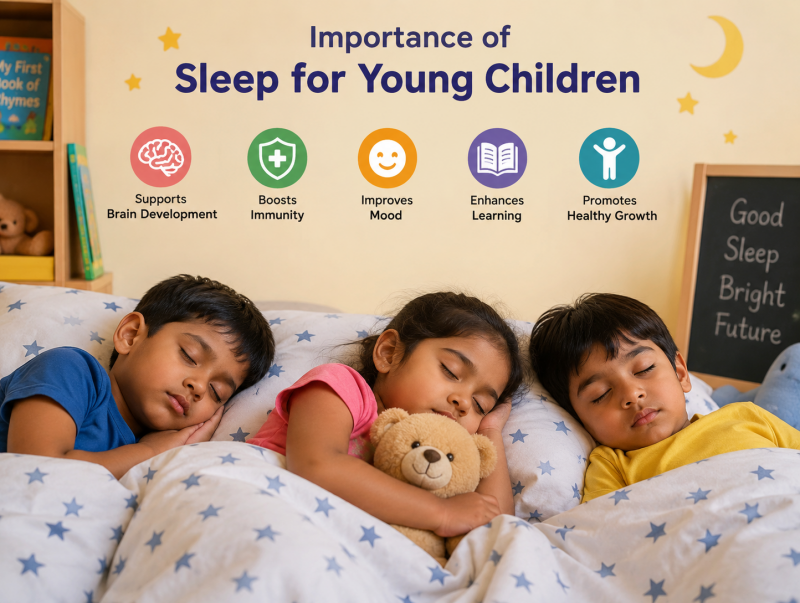
Importance of Sleep for Young Children
Sleep is one of the most important factors in a young child's growth, development, and overall well-being. During the early years, children's bodies and brains are developing rapidly, making adequate rest essential for healthy development. Just as nutritious food and physical activity are important, quality sleep plays a vital role in helping children learn, grow, and thrive.
Why Is Sleep Important for Young Children?
Young children are constantly exploring, learning new skills, and absorbing information from the world around them. Sleep provides the body and mind with the opportunity to rest, recover, and prepare for another day of learning and discovery.
When children get enough sleep, they are better able to concentrate, manage their emotions, interact positively with others, and participate actively in daily activities. Lack of sleep, on the other hand, can affect mood, behavior, learning, and overall health.
Supports Healthy Brain Development
Sleep is essential for brain growth and development. During sleep, the brain processes and stores information learned throughout the day. This helps children remember new words, concepts, and experiences.
For preschool children, adequate sleep can improve:
- Memory and learning abilities - Adequate sleep plays a vital role in improving memory and learning abilities. During sleep, especially deep sleep and REM sleep, the brain processes and organizes the information learned throughout the day. It strengthens neural connections, helping store new memories and making it easier to recall information later. A good night's sleep also improves concentration, problem-solving skills, creativity, and overall cognitive performance. Children and adults who get enough quality sleep are better able to focus, learn new concepts, and perform well in school, work, and daily activities.
- Problem-solving skills - Adequate sleep significantly improves problem-solving skills by allowing the brain to rest, process information, and make connections between ideas. A well-rested brain can think more clearly, analyze situations effectively, and make better decisions. Sleep also enhances creativity, logical thinking, and the ability to adapt to new challenges. People who get enough quality sleep are more likely to solve problems efficiently, stay focused, and respond calmly in difficult situations.
- Attention and concentration - Adequate sleep helps preschool children stay alert, focused, and ready to learn. Children who get enough sleep can pay better attention during story time, classroom activities, and play. They are more likely to follow instructions, complete simple tasks, and participate actively in learning. Good sleep also reduces tiredness, irritability, and distractions, helping young children enjoy learning and develop important early learning skills.
- Language development - Adequate sleep supports healthy language development in preschool children. While they sleep, their brains process and strengthen the new words, sounds, and communication skills they learned during the day. Children who get enough sleep are better able to understand instructions, express their thoughts, build vocabulary, and communicate confidently with teachers, family members, and friends. Good sleep also helps them participate more actively in conversations, storytelling, and classroom learning.
- Creativity and imagination - Adequate sleep helps preschool children develop creativity and imagination. A well-rested brain is more active in creative thinking, allowing children to explore new ideas, enjoy pretend play, create stories, draw pictures, and solve simple problems in imaginative ways. Good sleep also supports curiosity and confidence, helping children express themselves freely through art, music, play, and other creative activities.
A well-rested child is more prepared to participate in classroom activities, follow instructions, and engage in meaningful learning experiences.
Promotes Physical Growth
Many important growth processes occur while children are sleeping. During deep sleep, the body releases growth hormones that support healthy physical development.
Quality sleep helps:
- Build strong bones and muscles - Quality sleep is essential for helping preschool children build strong bones and muscles. During deep sleep, the body releases growth hormone, which supports healthy bone growth, muscle development, and tissue repair. Getting enough sleep also gives children the energy they need for active play, running, jumping, and other physical activities that strengthen their growing bodies and support overall healthy development.
- Support healthy weight management - Quality sleep helps preschool children maintain a healthy weight by supporting healthy growth and regulating the hormones that control hunger and fullness. Children who get enough sleep are less likely to overeat due to tiredness and have more energy for active play and physical activities. Good sleep, combined with a balanced diet and regular exercise, promotes healthy growth and overall well-being.
- Repair tissues and cells - Quality sleep helps preschool children repair tissues and cells as their bodies recover and grow during the night. While children are asleep, the body repairs muscles, skin, and other tissues, strengthens the immune system, and replaces damaged cells. This natural healing process supports healthy growth, helps children recover from daily activities, and keeps their bodies strong and healthy.
- Maintain overall physical health - Quality sleep is essential for maintaining overall physical health in preschool children. It supports healthy growth, strengthens the immune system, boosts energy levels, and helps the body function properly. Children who get enough sleep are more active, recover better from daily activities, and are less likely to become ill. Good sleep, along with a healthy diet and regular physical activity, lays the foundation for lifelong health and well-being.
Children who get enough sleep often have more energy for active play, sports, and exploration, all of which contribute to healthy growth.
Strengthens the Immune System
Sleep plays a crucial role in supporting the immune system. While children sleep, their bodies work to fight off infections and illnesses.
Children who regularly get sufficient sleep are often better equipped to:
- Resist common colds and infections - Children who regularly get sufficient sleep are better able to resist common colds and infections because sleep strengthens the immune system. During sleep, the body produces infection-fighting cells and proteins that help protect against viruses and bacteria. Well-rested preschool children are less likely to get sick, recover more quickly from illness, and have the energy to enjoy learning, playing, and everyday activities.
- Recover more quickly when they are sick - Children who regularly get sufficient sleep recover more quickly when they are sick because sleep gives the body time to heal and restore itself. During sleep, the immune system works to fight infections, repair damaged tissues, and reduce inflammation. Well-rested preschool children often regain their strength faster, feel better sooner, and return to their normal learning and play activities more quickly.
- Maintain overall good health - Children who regularly get sufficient sleep are better able to maintain overall good health. Quality sleep supports healthy growth, strengthens the immune system, improves energy levels, and helps the body function properly. Well-rested preschool children are more active, happier, and better prepared for learning and play. Good sleep also reduces the risk of illness and supports healthy physical, emotional, and cognitive development.
A strong immune system helps children attend preschool regularly and participate fully in learning activities.
Improves Emotional Well-Being
Young children are still learning how to understand and manage their emotions. Adequate sleep helps them regulate their feelings and respond appropriately to different situations.
Well-rested children are more likely to:
- Be patient and cooperative - Well-rested preschool children are more likely to be patient and cooperative throughout the day. Adequate sleep helps them manage their emotions, follow instructions, take turns, and interact positively with teachers and friends. Children who get enough sleep are generally calmer, more willing to share, and better able to participate in classroom activities and group play.
- Manage frustration effectively - Well-rested preschool children are better able to manage frustration effectively. Adequate sleep helps them stay calm, control their emotions, and cope with small challenges without becoming easily upset. Children who get enough sleep are more likely to solve problems peacefully, ask for help when needed, and bounce back quickly from disappointments during learning and play.
- Show positive social behavior - Well-rested preschool children are more likely to show positive social behavior. Adequate sleep helps them be kind, friendly, and respectful when interacting with others. Children who get enough sleep are better able to share, take turns, cooperate in group activities, and build healthy relationships with teachers and classmates. Good sleep also supports empathy and emotional regulation, making social interactions more enjoyable and positive.
- Feel happy and confident - Well-rested preschool children are more likely to feel happy and confident. Adequate sleep helps improve their mood, emotional well-being, and self-confidence. Children who get enough sleep are more willing to try new activities, participate in classroom learning, interact with friends, and express themselves positively. Feeling well-rested also helps them enjoy play, learn with enthusiasm, and develop a positive attitude toward everyday experiences.
In contrast, tired children may become irritable, emotional, or easily upset. Consistent sleep helps create a more balanced and positive emotional state.
Enhances Social Skills
Preschool is a time when children develop important social skills such as sharing, taking turns, communicating, and working with others.
When children get enough sleep, they are generally:
- More attentive during group activities - When preschool children get enough sleep, they are generally more attentive during group activities. A good night's sleep helps them stay focused, listen carefully to their teachers, and actively participate in circle time, storytelling, songs, and classroom discussions. Well-rested children are better able to follow instructions, engage with their classmates, and enjoy learning experiences throughout the day.
- Better able to interact with peers - When preschool children get enough sleep, they are better able to interact with their peers. Quality sleep helps them communicate clearly, share, take turns, and cooperate during play and classroom activities. Well-rested children are more likely to build positive friendships, resolve small conflicts calmly, and enjoy working and playing together in a friendly and supportive environment.
- More willing to participate in classroom experiences - When preschool children get enough sleep, they are more willing to participate in classroom experiences. A good night's sleep helps them feel energetic, curious, and ready to learn. Well-rested children are more likely to join in songs, stories, art activities, games, and group discussions with enthusiasm. They also feel more confident trying new activities, asking questions, and engaging with their teachers and classmates, making learning more enjoyable and meaningful.
- Better at understanding social cues and emotions - When preschool children get enough sleep, they are better at understanding social cues and emotions. Quality sleep helps them recognize facial expressions, body language, and the feelings of others. Well-rested children are more likely to show empathy, respond appropriately to different situations, and build positive relationships with teachers and friends. This supports healthy social and emotional development both in the classroom and at home.
Good sleep contributes to positive relationships with friends, teachers, and family members.
Supports Learning and School Readiness
Sleep has a direct impact on a child's ability to learn. Children who are well-rested can focus better, follow directions more easily, and retain information more effectively.
Adequate sleep helps preschoolers:
- Listen attentively during lessons - Adequate sleep helps preschoolers listen attentively during lessons. A well-rested child is more alert, focused, and ready to learn. Children who get enough sleep can pay attention to their teacher, follow simple instructions, and stay engaged during story time, circle time, and other classroom activities. This helps them understand new concepts, participate confidently, and enjoy a positive learning experience.
- Complete tasks successfully - Adequate sleep helps kid’s complete tasks successfully by improving their attention, memory, and ability to follow instructions. Well-rested children can stay focused on activities such as coloring, puzzles, crafts, and simple learning tasks without becoming easily distracted. They are also more likely to finish what they start, experience a sense of achievement, and develop confidence in their abilities.
- Participate confidently in activities - Adequate sleep helps preschoolers participate confidently in activities. A well-rested child feels more energetic, alert, and ready to join classroom experiences. Children who get enough sleep are more likely to take part in songs, storytelling, games, art, and group activities with enthusiasm. They are also more willing to try new things, answer questions, and interact with teachers and classmates, helping build confidence and a positive attitude toward learning.
- Develop early literacy and numeracy skills - Adequate sleep helps preschoolers develop early literacy and numeracy skills by improving their memory, attention, and ability to learn new concepts. Well-rested children are better able to recognize letters, sounds, numbers, shapes, and patterns. They can also participate more actively in reading, storytelling, counting, sorting, and other early learning activities, building a strong foundation for future academic success.
These benefits contribute significantly to school readiness and long-term academic success.
Recommended Sleep for Preschool Children
Sleep needs vary slightly from child to child, but experts generally recommend:
- Toddlers (1–2 years): 11–14 hours per day, including naps
- Preschoolers (3–5 years): 10–13 hours per day, including naps
- School-age children (6–12 years): 9–12 hours per day
Consistent sleep schedules help children establish healthy sleep habits and ensure they receive the rest they need.
Tips for Establishing Healthy Sleep Habits
Parents can encourage healthy sleep by creating a consistent bedtime routine. Helpful strategies include:
Maintain a Regular Sleep Schedule
Try to have children go to bed and wake up at the same time every day, including weekends.
Create a Calm Bedtime Routine
Activities such as reading stories, taking a warm bath, or listening to soft music can help children relax before bedtime.
Limit Screen Time Before Bed
Avoid television, tablets, and smartphones at least one hour before bedtime, as screen exposure can make it harder for children to fall asleep.
Provide a Comfortable Sleep Environment
A quiet, dark, and comfortable room can promote better sleep quality.
Encourage Physical Activity During the Day
Active play and exercise help children use their energy and sleep more soundly at night.
Conclusion
Sleep is a powerful foundation for healthy growth, learning, and development in young children. It supports brain function, physical growth, emotional well-being, social development, and overall health. By establishing healthy sleep habits early in life, parents can help their children develop routines that will benefit them for years to come.
A well-rested child is better prepared to learn, play, explore, and enjoy each day. Ensuring that young children get the sleep they need is one of the most valuable investments parents can make in their child's future success and happiness.
Add comment
Comments