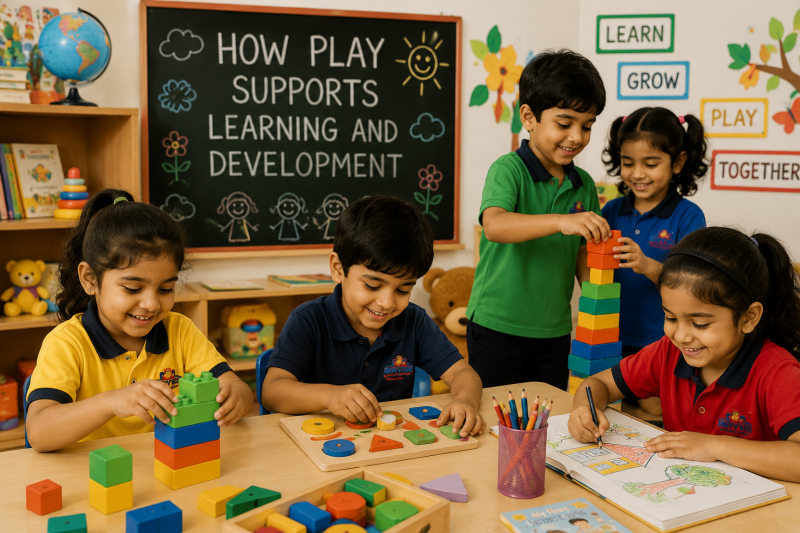
Play is much more than entertainment for children—it is one of the most influential ways they learn and grow. Through play, children explore their environment, solve problems, build relationships, and develop essential life skills. Research shows that play supports cognitive, social, emotional, language, and physical development, making it a vital part of early childhood education.
Intellectual Development
When children engage in play, they learn to think creatively, make decisions, and solve problems. Activities such as building with blocks, completing puzzles, and imaginative play encourage critical thinking and help children understand concepts such as cause and effect. Play also stimulates curiosity and strengthens memory and concentration skills.
Social and Emotional Growth
Play provides valuable opportunities for children to interact with others. Through sharing, taking turns, and cooperating during games, children learn important social skills. They also develop emotional awareness, self-confidence, empathy, and resilience as they navigate challenges and relationships during play.
Language and Communication Skills
Whether children are pretending to be doctors, teachers, or shopkeepers, play encourages conversation and storytelling. These interactions help expand vocabulary, improve listening skills, and strengthen communication abilities. Reading stories, singing songs, and engaging in role-play further support language development.
Physical Development
Active play helps children develop both gross and fine motor skills. Running, jumping, climbing, and dancing improve balance, coordination, and strength, while activities such as drawing, threading beads, and building with small objects strengthen hand-eye coordination and fine motor control.
The Importance of Play-Based Learning
Play-based learning allows children to explore and discover at their own pace while developing a love for learning. It encourages creativity, independence, and confidence, helping children build a strong foundation for future academic success. When children learn through play, learning becomes meaningful, enjoyable, and engaging.
Conclusion
Play is an essential part of childhood and a key driver of healthy development. By providing children with opportunities for both structured and unstructured play, parents and educators can support their growth in all areas—cognitive, social, emotional, language, and physical. Through play, children develop the skills they need to thrive both in school and in life.
Add comment
Comments